
Public Safety
People Deserve Accountability
A County Jail Safety and Custody Death Review Agenda
Demanding public accountability for constitutional jail safety, independent investigations, family rights, and a county government that protects life in custody.
No person should die in county custody because a jail failed to provide timely care, missed obvious warning signs, used force without accountability, or obscured what happened afterward.
When a death does occur, the county must treat it as a profound constitutional breach risk, a possible crime scene, a medical and systems-failure event, and a public-accountability event all at once.
Purpose:
This proposal recommends a county jail death investigation framework for Tarrant County government.
Its purpose is to protect the lives and constitutional rights of people in custody, give families reliable answers, and make every in-custody death subject to thorough, independent, transparent, and accountable review.
What “Safe Dialogue” means:
This proposal treats a death in custody as more than a single incident.
It is a public-safety event, a constitutional-risk event, a medical-review event, and a public-trust event. The county must respond with urgency, independence, and visible follow-through.
Core Proposals
People Deserve Accountability is built around a simple principle: incarceration in a county jail is a deprivation of liberty, not a death sentence.
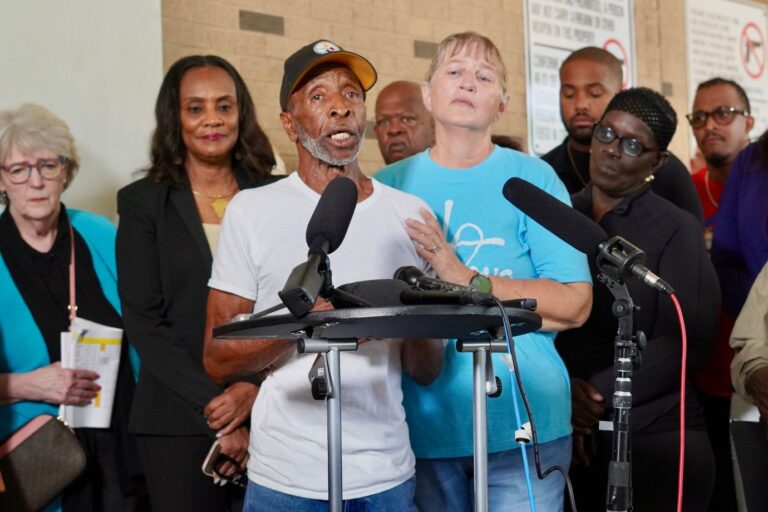
The county’s policy should require independent criminal investigation, separate administrative investigation, full medical and mortality review, timely family notification, public disclosure, visible corrective action, and continuing oversight until every recommendation is completed or publicly rejected with explanation. This is about changing how Tarrant County responds when a person dies behind county walls. Families should not have to rely on rumor, delay, or litigation to understand what happened.
Require independent investigation
Trigger immediate scene control, evidence preservation, outside criminal review, and a separate administrative investigation after any jail death or serious injury likely to result in death.
Make medical & mental-health review automatic
Require full medical-examiner involvement, autopsy, toxicology, records review, and a county mortality review focused on care, medication, observation, suicide risk, withdrawal, emergency response, and recent staff contacts.
Put families & the public first
Create a family-notification protocol, public disclosure deadlines, video-release standards, and written explanations when disclosure is delayed or legally limited.
Turn findings into prevention
Require medical and mortality review, corrective-action plans, quarterly public updates, and annual custodial-death reporting so that every death generates institutional learning and systemic improvement.
Policy In Action
1. Launch a Custody Death Response Protocol
Require Independent Investigation & Immediate Response
The first minutes after a death matter. The county should preserve evidence, protect the integrity of the investigation, and make sure no involved agency controls the entire story. A criminal investigation asks whether a crime occurred — but the county also needs a separate administrative investigation that asks whether jail policy, supervision, staffing, training, medical care, and emergency response failed.
- Require immediate scene preservation, video retention, body-camera preservation, witness identification, and witness separation after any death or serious injury likely to result in death.
- Notify command staff, outside criminal investigators, the medical examiner, county legal counsel, prosecutors, public information staff, and a family-liaison team through a written multi-channel notification protocol.
- Require an outside agency to lead or co-lead the criminal investigation when force, restraint, neglect, delayed care, suicide, overdose, unexplained trauma, or staff conduct may be involved.
- Automatically open a parallel administrative investigation after every in-custody death — regardless of whether a complaint has been filed or misconduct is alleged.
- Review housing classification, supervision levels, observation rounds, medical requests, mental-health alerts, grievance history, use of force, restraint, staff deployment, and emergency response time.
- Require written findings, policy recommendations, personnel recommendations when appropriate, and a binding corrective-action timeline.
2. Create an Independent Custody-Death Review Board
A jail should not be the only institution explaining why someone died in its custody. Independent review strengthens public safety, constitutional compliance, and public trust.
- Create a custody-death review board with multidisciplinary expertise. The board should strive to include members with correctional-health, behavioral-health, civil-rights, legal, family-advocacy, and public-accountability expertise. At a minimum, the board must include representation from at least four of these fields, including one medical or behavioral-health representative, one legal or civil-rights representative, one family-advocacy or community-accountability representative, and at least one member appointed independently of the sheriff.
- Authorize review of every jail death, aggregate trends, video-release decisions, investigative timelines, medical and mental-health findings, and corrective-action closure.
- Require the board to publish non-confidential findings, track recommendations, and identify any recommendation that is rejected or delayed with a written explanation.
3. Turn Findings Into Prevention
Every in-custody death must generate institutional learning. Medical and mortality review, corrective-action tracking, and public accountability reporting are not optional follow-up measures — they are the mechanism by which the county demonstrates that it takes each death seriously and is committed to preventing the next one.

- Require full medical-examiner involvement, forensic autopsy, toxicology, and records review after every jail death unless legally prohibited by a documented outside authority.
- Create a County mortality-review process that examines intake screening, medication continuity, withdrawal management, suicide precautions, housing assignment, observation rounds, isolation, emergency response, and recent staff contact.
- Maintain a public dashboard and annual report that includes deaths, cause and manner when available, days in custody, housing unit, classification, mental-health designation, detox needs, recent use of force, hospital transport, and investigation status.
- Publish bi-annual corrective-action updates with deadlines, responsible officials, and proof of completion until every recommendation is completed or publicly rejected with written explanation.
- Use annual audits and after-action reviews to identify repeated failures in observation rounds, medication administration, staffing, transport, restraint, emergency response, facility conditions, or contractor performance.
4. Protect Families & Make Transparency the Default
Families should not have to fight the county for basic information after a loved one dies in custody, the public should not have to guess what happened. Clear disclosure rules protect families, taxpayers, public servants, and the integrity of the investigation.
- Notify next of kin promptly through a designated family-liaison team and provide the name of the investigating agency, a county point of contact, and a written explanation of the reviews underway.
- Provide defined update intervals, instructions for requesting records, and notice before any public release of critical-incident video or major public report.
- Offer language access, disability accommodation, trauma-informed communication, and clear guidance on autopsy, records, property, and complaint procedures.
- Publish a preliminary public notice within 24 hours of any in-custody death — identifying the deceased, housing location, time found unresponsive, whether force was used, whether transport to a hospital occurred, and which agencies are investigating — subject only to narrow privacy or investigative redactions.
- Publish a final public report after the autopsy and major reviews conclude, including findings, timeline, policy issues, corrective actions, and any legally required redactions.


Helping families starts with a County Judge who decides to show up for our kids.
Join the fight to bring true Public Safety to all of Tarrant County.